

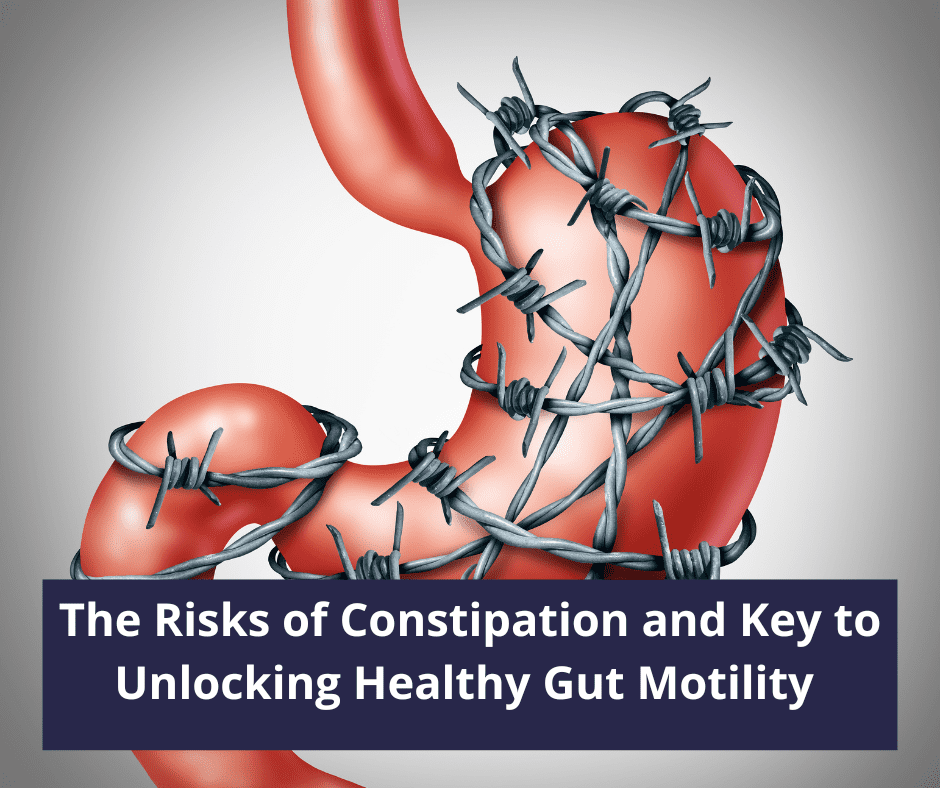
Constipation is associated with many more adverse health conditions that most people realise.
Common ailments include headaches, anxiety, brain fog, reduced executive brain function, a host of autoimmune conditions and various heart conditions.
Constipation puts us at greater risk of:
- Brain fog, headaches and fatigue (1)
- Dementia (50% increased risk) (2)
- Allergic rhinitis (230% increased risk) (3)
- Parkinson’s Disease – constipation can precede a Parkinson’s diagnosis by over a decade (4).
- Stroke (20% increased risk) (5)
- Anxiety (33% increased risk) (6)
- Cognitive impairment (increased risk 11%) (7).
Why you may ask – what is the link? One clear and increasingly well researched area is how toxins that are in waste matter, waiting to be eliminated, can be reabsorbed into the body (endotoxins) driving inflammation systemically. So basically the longer we hold onto waste matter, the longer there is for this reabsorption to occur (8).
What exactly is constipation:
This is often a subject of confusion when I talk to clients. Frequently they may assume that just because something is ‘normal’ for them, such as going only 3-4 x week, that is ok. Really we want to aim to be going daily and at least once. From a physiological perspective, optimal bowel function is typically daily, complete, and comfortable evacuation.
There are different ways of classifying constipation but the official NICE guidelines use something called ROME IV criteria; this refers to constipation not explained by structural or disease causes, and is often very responsive to nutritional and lifestyle intervention.
To meet the Rome IV criteria you need at least 2 of the following for at least 3 months: straining, lumpy/hard stools (see image below), sensation of incomplete evacuation, manual manoeuvres and fewer than 3 spontaneous bowel movements a week (9).
The Bristol Stool Chart (Image 1) is a useful tool to visualise. Anything in the TYPE 3-5 range on the Bristol Stool Chart is classified as ‘normal’.
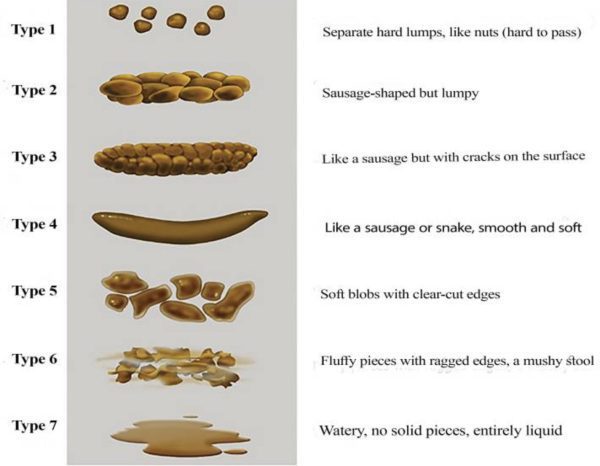 Image 1: Bristol Stool Chart.
What can drive constipation:
- Poor hydration.
- A highly processed diet.
- Low fibre diet.
- Impaired bile flow (which supports gut motility and fat digestion).
- Dysbiotic bacteria.
- Structural issues can aggravate but even with a ‘torturous gut’ there is a lot you can do from a nutrition and lifestyle perspective. .
- Lack of exercise and a sedentary lifestyle.
The problem with laxatives:
Laxatives are often the go-to in conventional care but unfortunately these are not addressing the root cause and can even worsen our natural motility (peristalsis). Many work by drawing water into the bowel or stimulating the intestinal lining, which may provide short-term relief but does not restore normal physiological function. There is also some evidence they can also alter the PH of the gut and microbiome composition if used long term (10).
What you can do:
There are 3 primary areas you can think of and check you have covered off :
- Fluid – the best way to know if you are well hydrated is to look at the colour of your urine as exercise, heat, body size all vary the volume we need and there is no evidence recommendation. Main takeaways from here – you want to have straw coloured urine, not completely pale or bright yellow (Caveat – B vits in the morning may skew this but only for the morning). Do not forget the impact of foods high in water such as as cucumber, berries, watermelon all of which can contribute meaningfully to total hydration and provide electrolytes that help fluid move into cells
- Exercise – Movement counts. Even just going for a walk at lunchtime, WALK UP THE STAIRS instead of the lift or escalator, it doesn’t have to be intense, consistency is most important. More vigorous activity can further support gut motility and metabolic health, but always work within your individual capacity.
- Fibre – government guidelines are 30 g/day of fibre but sometimes we need a higher intake. However, tolerance matters — if higher fibre intake causes significant bloating or discomfort, this may indicate underlying dysbiosis that needs addressing. We want to get both soluble and insoluble fibres in – they both have different health benefits and many foods contain both.
Soluble fibre – dissolves in water to form a gel like substance, is an important food source for gut bacteria and found in plant pectins (great source apples and pears) and gums, good evidence on helping lowering cholesterol.
Insoluble fibre – such as that found in wheat bran, many vegetables and legumes doesn’t dissolve in water and as such supports the movement of the waste through the intestine and out of the body by bulking it out.
We need both soluble and insoluble and many foods contain both. Key fibre foods to include daily in your diet in rotation are:
- Kale, okra, sweet potato, broccoli, sprouts.
- Ground flax and chia. 1-2 tablespoons a day dissolved in water (I add to my oats the night before for breakfast pots).
- Apples and pears (combine with a fat/protein source for glycaemic stability).
- Oat bran – also good for lowering cholesterol – also combine with a fat/protein source.
- Pysillium husk can a useful addition.
- 2-4 kiwis a day – randomised controlled trials show kiwifruit significantly improves stool frequency and consistency in chronic constipation..
- Legumes such as black beans, chickpeas and lentils.
POSTURE Optimising posture on the loo (feet elevated on a small stool to mimic a squat position) straightens the anorectal angle and can significantly improve ease of elimination.
AVOID ultra processed foods. There is not much to add to this! The reasons are too numerous and most of already know them.
RED FLAGS: always seek medical advice if you see blood in your stools or have persistent and unusual pain.
If you’d like any more help or advise please do get in touch at info@kchnutrition.co.uk
This is also the subject of a talk I do for corporates as part of my Corporate Series. If you’d like more details on the series and what is included please do contact me info@kchnutrition.co.uk